
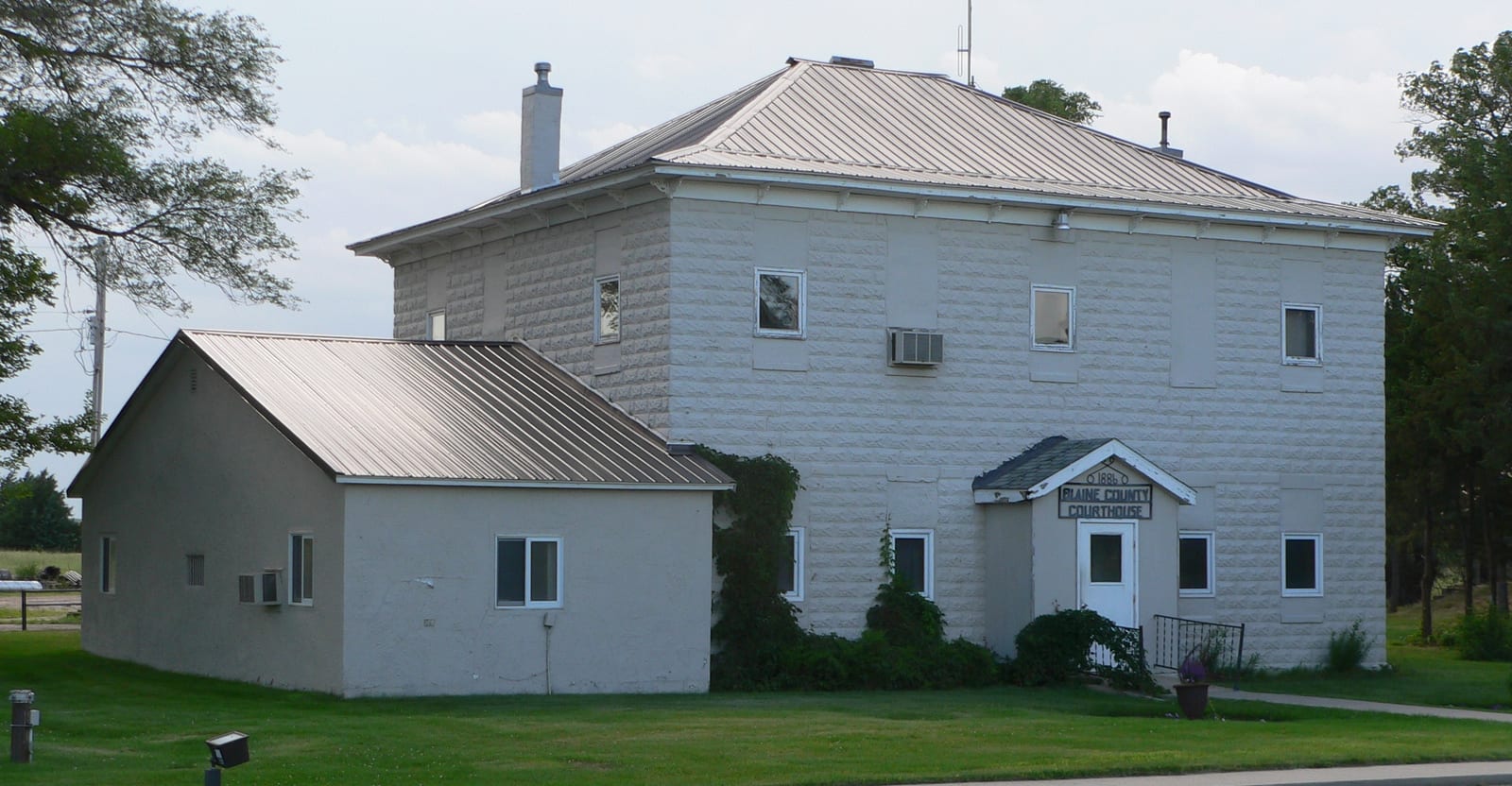
Blaine County, Nebraska: Stable Rural Right county. In 2024, voted R+73%. Republican peak: R+79 in 2012.
Key facts
- 2024 presidential margin
- R+73MIT Election Lab
- Political typology
- Stable Rural RightAkashic typology
- Population
- 4222024 5-year
- Median household income
- $69,5832024 5-year
- White (non-Hispanic)
- 100.0%2024 5-year
- Black
- 0.0%2024 5-year
- Hispanic / Latino
- 0.0%2024 5-year
- Peak Democratic margin
- D+27 in 1932MIT Election Lab
- Peak Republican margin
- R+79 in 2012MIT Election Lab
- Most similar
- Kerr County, TX · similarity 1.00
| Donald Trump ✓Republican | 85.6% | 250 |
|---|---|---|
| Kamala HarrisDemocratic | 12.7% | 37 |
| OtherAll other candidates | 1.7% | 5 |
| Year | Margin (D minus R) |
|---|---|
| 1876 | No data |
| 1880 | No data |
| 1884 | No data |
| 1888 | No data |
| 1892 | +24.4% |
| 1896 | −17.6% |
| 1900 | −15.6% |
| 1904 | −51.4% |
| 1908 | −15.3% |
| 1912 | +8.5% |
| 1916 | +13.7% |
| 1920 | −29.6% |
| 1924 | −20.8% |
| 1928 | −46.7% |
| 1932 | +27.1% |
| 1936 | +3.2% |
| 1940 | −18.7% |
| 1944 | −19.2% |
| 1948 | −0.8% |
| 1952 | −53.9% |
| 1956 | −47.3% |
| 1960 | −57.6% |
| 1964 | −25.1% |
| 1968 | −64.7% |
| 1972 | −71.9% |
| 1976 | −35.1% |
| 1980 | −67.4% |
| 1984 | −76.6% |
| 1988 | −64.7% |
| 1992 | −42.4% |
| 1996 | −61.1% |
| 2000 | −73.4% |
| 2004 | −77.6% |
| 2008 | −70.6% |
| 2012 | −78.9% |
| 2016 | −77.6% |
| 2020 | −77.3% |
| 2024 | −72.9% |
| Year | Won | Margin | Democratic | Republican | Total |
|---|---|---|---|---|---|
| R | 37 | 250 | 292 | ||
| R | 35 | 280 | 317 | ||
| R | 30 | 276 | 317 | ||
| R | 29 | 268 | 303 | ||
| R | 43 | 266 | 316 | ||
| R | 38 | 301 | 339 | ||
| R | 43 | 299 | 349 | ||
| R | 53 | 284 | 378 | ||
| R | 64 | 256 | 453 | ||
| R | 72 | 338 | 411 | ||
| R | 48 | 363 | 411 | ||
| R | 63 | 361 | 442 | ||
| R | 133 | 281 | 422 | ||
| R | 56 | 343 | 399 | ||
| R | 64 | 344 | 433 | ||
| R | 195 | 326 | 521 | ||
| R | 113 | 420 | 533 | ||
| R | 149 | 416 | 565 | ||
| R | 137 | 458 | 595 | ||
| R | 248 | 252 | 500 | ||
| R | 248 | 366 | 614 | ||
| R | 311 | 454 | 765 | ||
| D | 365 | 342 | 716 | ||
| D | 431 | 244 | 689 | ||
| R | 175 | 484 | 662 | ||
| R | 132 | 253 | 583 | ||
| R | 176 | 328 | 514 | ||
| D | 246 | 184 | 452 | ||
| D | 163 | 126 | 434 | ||
| R | 160 | 220 | 392 | ||
| R | 34 | 127 | 181 | ||
| R | 75 | 103 | 179 | ||
| R | 60 | 86 | 148 | ||
| O | 61 | 23 | 156 | ||
| — | — | — | — | ||
| — | — | — | — | ||
| — | — | — | — | ||
| — | — | — | — |
Demographics
Blaine County's 583 residents make it among the smallest counties by population in the nation, and its 2024 presidential margin of R+73.2 reflects the lopsided partisanship typical of Nebraska's sparsely settled Sandhills ranching communities.
The Republican margin here reached seventy-nine points in 2012. Between 2020 and 2024 the county moved four points toward the Democratic candidate; the 2024 margin was seventy-three points.
A population of 422, a 100% non-Hispanic-white share, and a median household income of $69,583 describe the county. The county's voting pattern over the last decade is most similar to that of Kerr County and Thomas County.
Compare two places, side by side
Twelve curated comparisons line up election history, demographics, and the divergence story for two places at a glance. Browse all comparisons →
Blaine County, Nebraska. Akashic. https://akashic.app/county/31009/. Accessed May 20, 2026. License: CC BY 4.0.